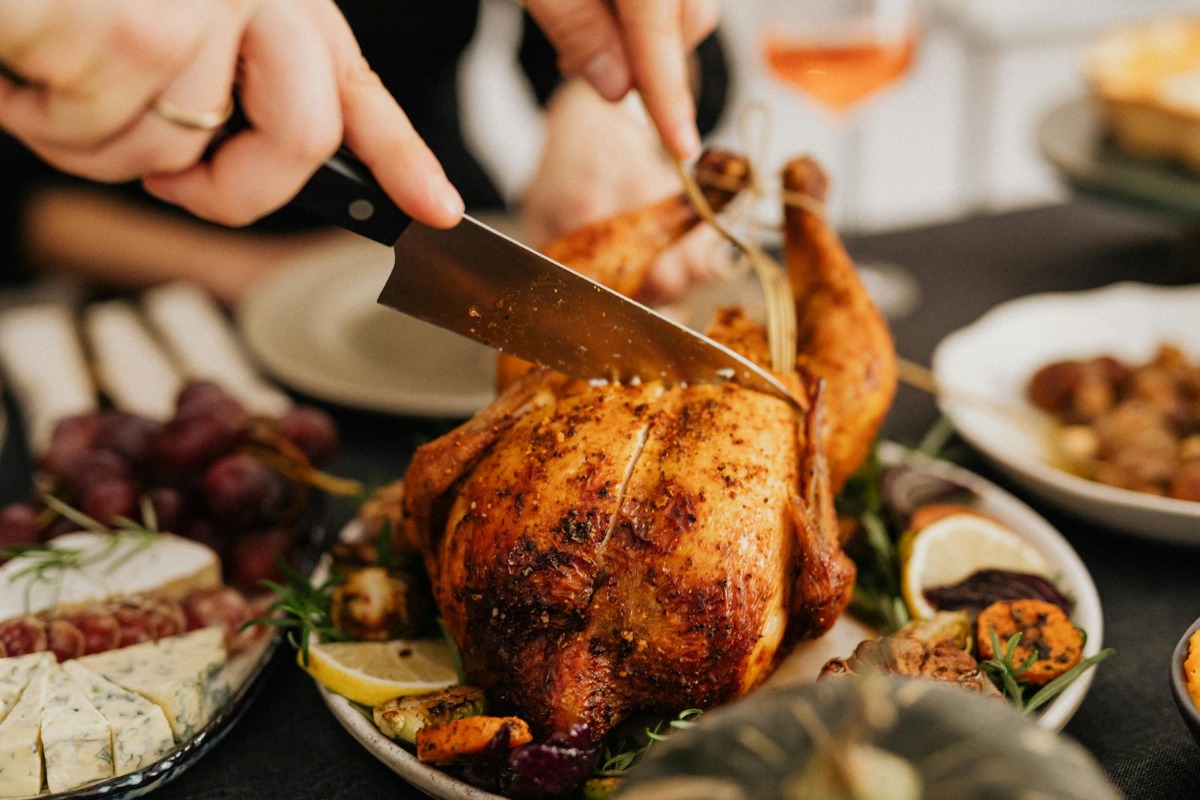
Smoked turkey is the upgrade your holiday table desperately needs. Forget the dry, flavorless oven bird your family pretends to enjoy — a properly smoked turkey has crispy mahogany skin, juicy meat infused with wood smoke, and a flavor that makes people go back for thirds. And it’s easier than you think.
This guide covers everything: brining for maximum juiciness, why spatchcocking is non-negotiable, the two-stage temperature technique for crispy skin, wood pairings, and the exact internal temps to pull at. Whether you’re smoking your first turkey or your tenth, this is the playbook.
Why Smoke a Turkey?
- Flavor: Wood smoke transforms bland turkey into something memorable. The mild sweetness of apple or cherry smoke complements poultry perfectly
- Juicier meat: Low-and-slow smoking keeps turkey breast moist in ways oven roasting struggles with
- Frees up the oven: Your smoker handles the turkey outside while your oven handles sides, pies, and rolls inside. Game-changer for Thanksgiving logistics
- Year-round versatility: Smoked turkey isn’t just for holidays. Turkey breast sandwiches, smoked turkey legs, and leftover turkey soup are worth making any weekend
If you’ve successfully smoked a whole chicken, turkey is the natural next step — same techniques, just bigger and longer.
What You’ll Need
Equipment:
- Any smoker (pellet, charcoal, kamado, offset) — see our best smokers for beginners or best charcoal smokers
- A wireless meat thermometer with at least two probes (breast + thigh) — see our thermometer guide
- Heavy-duty kitchen shears (for spatchcocking)
- Large cutting board and roasting pan
- Butcher’s twine (if cooking whole)
Ingredients:
- 1 whole turkey (12–14 pounds ideal for smoking)
- Kosher salt (1 tbsp per 5 lbs for dry brine)
- 2 tbsp olive oil or melted butter
- BBQ poultry rub (or simple: paprika, garlic powder, onion powder, black pepper, brown sugar)
- Apple, cherry, or pecan smoking wood
- Optional: aromatics for the cavity (onion, celery, rosemary, thyme)
Time: 24-hour dry brine + 20 min prep + 3.5–5 hours cook (spatchcocked) or 5–7 hours (whole) + 30 min rest.
Step 1: Choose the Right Turkey
Size matters more than you think. Stick to a 12–14 pound turkey for smoking. Larger birds (16+ lbs) create a dangerous problem: the outer meat dries out long before the thick breast center reaches safe temperature. If you need to feed more than 12 people, smoke two smaller turkeys instead of one giant bird.
Fresh vs frozen: Both work. If frozen, thaw in the fridge for 3–4 days (24 hours per 5 lbs). Never smoke a partially frozen turkey.
Avoid pre-brined/self-basting turkeys (like Butterball) — they’re injected with salt solution that interferes with dry brining and can make smoked turkey overly salty.
Step 2: Dry Brine (24 Hours Before)
Dry brining is the single most important step for smoked turkey. It seasons the meat deeply, keeps it juicy during the long cook, and dries the skin for maximum crispiness. We covered this technique in our chicken guide — for turkey, it’s even more critical because the bird is bigger and cooks longer.
- Remove giblets and neck from the cavity
- Pat the entire turkey completely dry inside and out
- Apply kosher salt generously — about 1 tablespoon per 5 pounds, plus extra under the breast skin
- Place on a wire rack over a rimmed baking sheet, uncovered
- Refrigerate for 24 hours (minimum 12 hours, maximum 48)
What’s happening: Salt penetrates the meat (seasoning it deeply), the protein structure changes to retain more moisture during cooking, and the fridge air dries the skin surface. Dry skin = crispy skin. Wet skin = rubbery skin.
Step 3: Spatchcock the Turkey (Strongly Recommended)
Spatchcocking (removing the backbone and flattening the bird) is the single biggest improvement you can make to smoked turkey. Here’s why:
- Even cooking: Breast and thigh reach their target temps at the same time instead of the breast overcooking while the thigh catches up
- Faster cook: 3.5–5 hours instead of 5–7 hours for a whole turkey
- More smoke exposure: Flattened turkey has more surface area exposed to smoke
- Crispier skin: All the skin faces up toward the heat instead of half being hidden underneath
- Place turkey breast-side down on a large cutting board
- Use heavy-duty kitchen shears to cut along both sides of the backbone
- Remove the backbone completely (save it for gravy stock)
- Flip the turkey breast-side up
- Press firmly on the breastbone with both hands until you hear it crack and the bird lies flat
Not comfortable spatchcocking? You can smoke a whole turkey — it just takes 1.5–2 hours longer and the breast will be slightly drier. Truss the legs with butcher’s twine and stuff aromatics in the cavity.
Step 4: Season the Turkey
After the dry brine, the turkey is already salted. Now add flavor and promote browning:
- Pat the turkey dry one more time (remove any moisture that accumulated)
- Brush olive oil or melted butter over all skin surfaces — helps the rub stick and promotes browning
- Apply your poultry rub generously. Get it under the breast skin where you can for maximum penetration
- If cooking whole: stuff the cavity with halved onion, celery, rosemary sprigs, and thyme
- Let the seasoned turkey sit at room temperature for 30–45 minutes while your smoker preheats
Don’t add more salt since the dry brine already handled that. If your rub contains salt, use half the amount.
Step 5: Set Up the Smoker (275°F Target)
Unlike brisket or pork shoulder where 225°F is ideal, turkey smokes best at 275°F. Here’s why:
- Skin: At 225°F, turkey skin never gets hot enough to render and crisp. It stays rubbery. 275°F gets the skin browning throughout the cook
- Safety: Turkey is poultry — it needs to reach 165°F internal quickly enough to stay in the safe zone. 275°F keeps the cook moving
- Smoke absorption: Turkey still absorbs plenty of smoke at 275°F. You don’t need ultra-low temps for flavor
Best wood for turkey:
- Apple: Our #1 pick — mild, sweet, beautiful color
- Cherry: Fruity with gorgeous red skin tone
- Pecan: Nutty and slightly bolder, excellent for turkey
- Maple: Sweet and subtle — pairs beautifully with the brown sugar in most rubs
Avoid hickory and mesquite for turkey. Both are too aggressive and will overpower the delicate poultry flavor. For a deeper dive on wood pairings, see our hickory vs mesquite guide and wood pairing guide.
Step 6: Smoke the Turkey
Place the turkey skin-side up directly on the grill grates (spatchcocked) or breast-side up (whole). For spatchcocked, the bird should lie completely flat.
Probe placement (two probes recommended):
- Probe 1: Thickest part of the breast, avoiding bone
- Probe 2: Thickest part of the thigh, avoiding bone
Close the lid and resist opening it. Every peek costs 10–15 minutes of cook time. Trust your thermometer probes — this is why a good wireless thermometer is non-negotiable for turkey.
Optional crispy skin boost: During the last 30–45 minutes, crank the smoker to 350–375°F to render and crisp the skin. This is the same two-stage technique from our chicken guide — it works even better on turkey.
Step 7: Pull at the Right Temperature
Turkey has two different target temps because white meat (breast) and dark meat (thigh) cook differently:
- Breast: Pull at 160°F (carries over to 165°F during rest) — juicy, safe
- Thigh: Pull at 175–180°F — dark meat needs higher temps to become tender
With a spatchcocked turkey, breast and thigh reach their targets within 15–20 minutes of each other. With a whole turkey, the breast often finishes 30–45 minutes before the thigh — which is why spatchcocking is so strongly recommended.
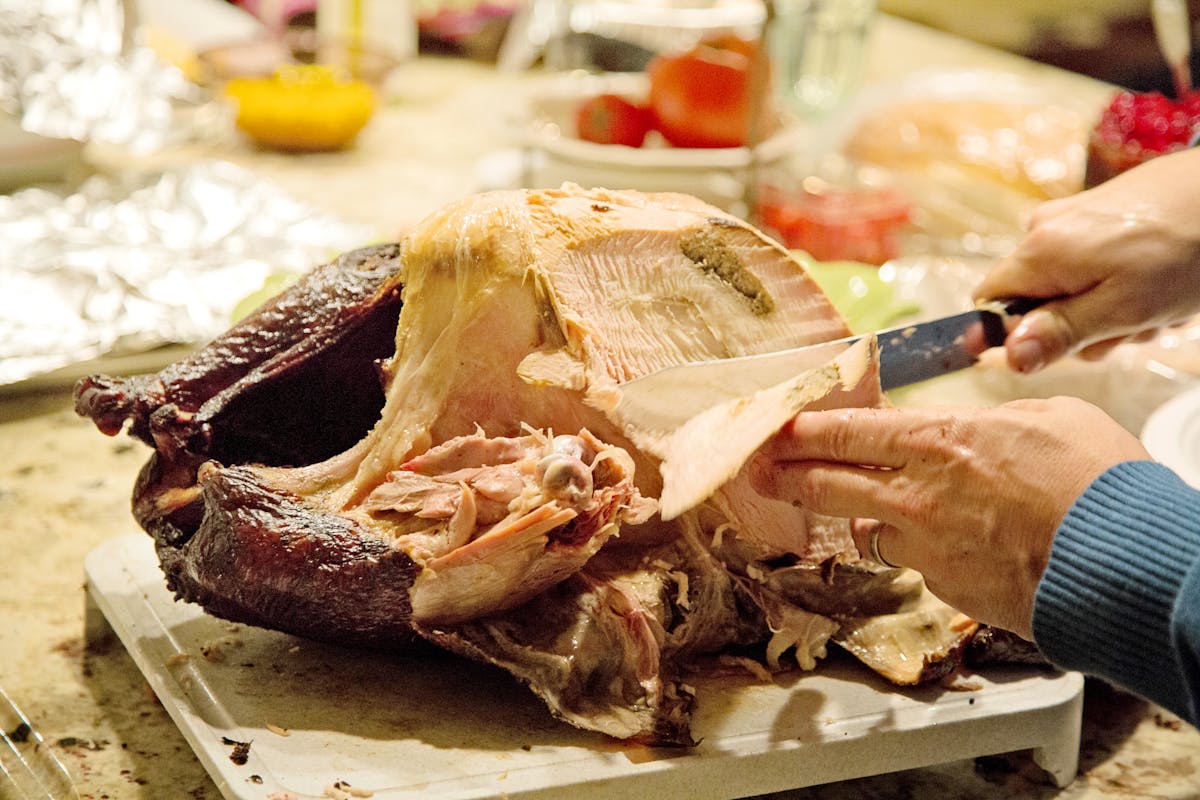
Rest for 30 minutes minimum. Tent loosely with foil and let the turkey rest on a cutting board for at least 30 minutes (up to 45). Turkey is bigger than chicken and needs more rest time for juices to redistribute. Carving too early = dry turkey.
Cook Timeline at a Glance
| Stage | Smoker Temp | Duration | Internal Temp |
|---|---|---|---|
| Dry brine (day before) | — | 24 hours in fridge | — |
| Season & rest | — | 30–45 min at room temp | — |
| Smoke (spatchcocked) | 275°F | 3–4 hours | Breast → 150°F |
| Optional high-heat finish | 350–375°F | 30–45 min | Breast → 160°F |
| Rest | — | 30–45 minutes | Breast → 165°F |
Rule of thumb: Budget approximately 15 minutes per pound for spatchcocked turkey at 275°F, or 20 minutes per pound for whole turkey. Always cook to temperature, not time.
8 Common Smoked Turkey Mistakes
1. Turkey is too big. Anything over 14 lbs creates uneven cooking problems. Smoke two 12-pounders instead of one 20-pounder.
2. Skipping the dry brine. Without dry brining, smoked turkey breast dries out during the long cook. 24 hours of salt on the bird fixes this entirely.
3. Smoking too low (225°F). Turkey skin never crisps at 225°F — it turns rubbery and chewy. Use 275°F as your baseline.
4. Using mesquite or heavy hickory. Turkey is delicate poultry. Mesquite will destroy it. Stick with apple, cherry, or pecan. See our wood comparison for details.
5. No thermometer probes. Turkey is the #1 meat that people overcook on the smoker. Without dual probes monitoring breast and thigh simultaneously, you’re guessing.
6. Skipping the rest. 30 minutes minimum. Turkey needs time for juices to redistribute throughout the bird. Carving a hot turkey = river of juice on the cutting board and dry meat on the plate.
7. Opening the lid too often. Every peek drops temperature 25–50°F and adds 15+ minutes to cook time. Trust your wireless thermometer.
8. Not spatchcocking. Whole turkey cooks unevenly — the breast overcooks while the thigh catches up. Spatchcocking solves this completely and cuts 1.5–2 hours off the cook.
FAQ: Smoking a Turkey
How long does it take to smoke a turkey?
A spatchcocked 12–14 lb turkey at 275°F takes 3.5–5 hours. A whole turkey of the same size takes 5–7 hours. Always cook to internal temp (160°F breast), not time.
What temperature should I smoke a turkey?
275°F for the main cook, with an optional bump to 350–375°F during the last 30–45 minutes for crispy skin. This is higher than brisket or pork shoulder because turkey skin needs heat to render.
Should I brine or dry brine?
Dry brine (salt only, uncovered in the fridge for 24 hours). Wet brining adds moisture to the skin surface, which makes it harder to crisp on the smoker. Dry brining seasons deeply AND dries the skin for maximum crispiness.
What’s the best wood for smoking turkey?
Apple is our top pick — mild, sweet, and complementary. Cherry and pecan are also excellent. Avoid hickory (too strong) and mesquite (way too strong). Turkey is delicate poultry that’s easily overpowered by bold woods.
Can I smoke a frozen turkey?
No. A frozen or partially frozen turkey is a food safety hazard on a smoker. The outer meat enters the danger zone (40–140°F) for too long while the inside thaws. Fully thaw in the fridge first (24 hours per 5 lbs).
How do I get crispy skin on smoked turkey?
Three keys: (1) Dry brine uncovered in the fridge for 24 hours. (2) Pat completely dry before seasoning. (3) Smoke at 275°F and finish at 350°F+ for the last 30–45 minutes. Same technique that works for smoked chicken.
Can I smoke just a turkey breast instead of a whole bird?
Absolutely. A boneless turkey breast (4–6 lbs) smokes in about 2–3 hours at 275°F and is much simpler to manage. Same dry brine and seasoning technique — just a shorter cook. Great for smaller gatherings.
You’re Ready to Smoke the Best Turkey of Your Life
Dry brine for 24 hours, spatchcock, season with a simple poultry rub, smoke at 275°F with apple wood, boost to 350°F for the last 30 minutes, pull when the breast hits 160°F, rest 30 minutes. That’s the entire recipe for turkey that will make you the hero of every holiday and backyard cookout.
Once you’ve nailed smoked turkey, you’ve essentially mastered poultry on the smoker. The same dry brine + two-stage technique works for whole chickens, turkey breast, game hens, and duck.
More smoking guides:
- How to smoke a whole chicken (same technique, smaller bird)
- How to smoke a brisket (the king of BBQ)
- How to smoke pork shoulder (easiest long cook)
- How to smoke ribs (crowd-pleaser)
- Smoking meat for beginners (start here if you’re new)
- Best wireless meat thermometers (essential for turkey)
- Best smokers for beginners
- Best charcoal smokers
- Hickory vs mesquite (and why to avoid both for turkey)
- Best wood for smoking