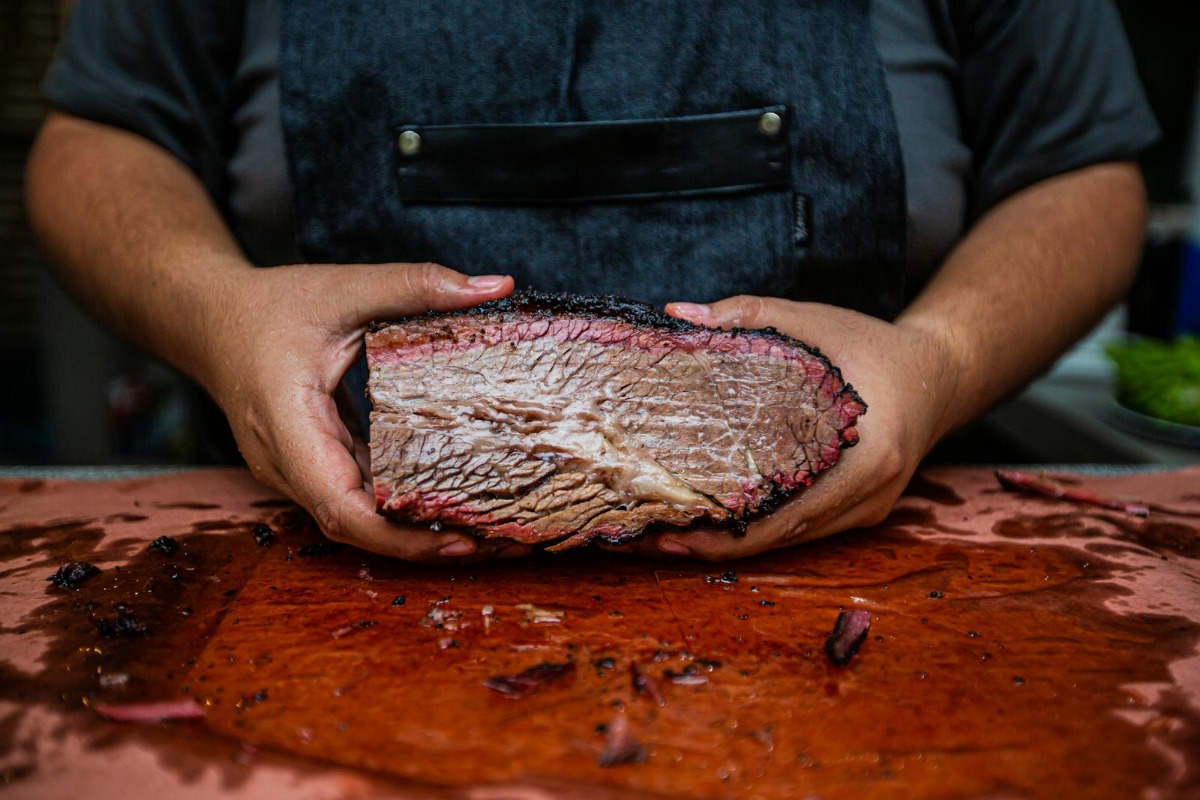
Smoking a brisket is the holy grail of BBQ — the cook that separates backyard grillers from real pitmasters. Done right, you get tender, smoky, melt-in-your-mouth beef with a crisp peppery bark. Done wrong, you get dry, tough shoe leather that wastes a $100 piece of meat.
Here’s the good news: smoking a brisket isn’t actually difficult once you understand the principles. This complete beginner’s guide walks you through every step — from picking the right brisket at the butcher to slicing it against the grain when it’s done. Follow this and your first brisket will turn out better than most BBQ joints.
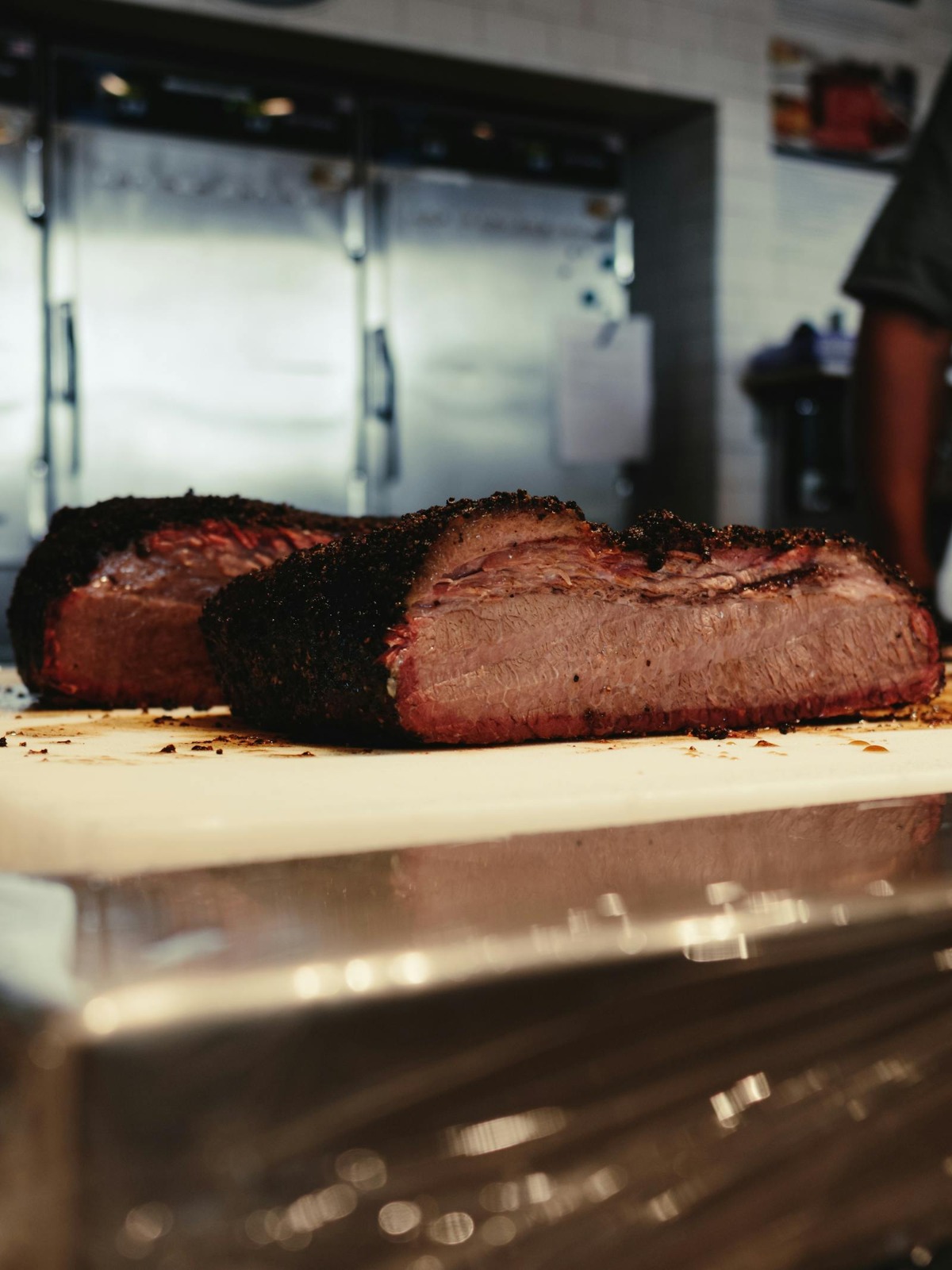
What You’ll Need Before You Start
Equipment:
- A smoker capable of holding 225–275°F for 12+ hours (see our best smokers for beginners guide)
- A wireless meat thermometer with two probes (one for grate temp, one for meat) — non-negotiable
- Pink butcher paper or aluminum foil for wrapping
- A sharp boning knife for trimming
- A large cutting board (24″+ recommended — brisket is huge)
- Insulated cooler for resting
- Heat-resistant gloves
Ingredients:
- 1 whole packer brisket (12–14 lbs)
- Kosher salt (coarse)
- Coarse black pepper (16-mesh works best)
- Optional: garlic powder, yellow mustard as a binder
- Quality smoking wood — oak is the gold standard (see our complete wood guide)
Time commitment: Plan 14–18 hours from start to finish for a 12-pound brisket. Most of this is hands-off cooking time, but you need to plan around it.
Step 1: Choose the Right Brisket
Not all briskets are created equal. The brisket you pick at the butcher determines half the outcome before you even fire up the smoker.
Buy a whole packer brisket. A “packer” is the full brisket containing both muscles — the lean flat and the fatty point. Avoid buying just the flat by itself. The point’s fat content is what keeps the cook forgiving and gives you the best flavor.
Target weight: 12–14 pounds. This size cooks evenly and feeds 12–16 people. Anything under 10 pounds cooks too fast and dries out. Over 16 pounds is a beast that takes 18+ hours.
Look for these qualities:
- Grade: USDA Choice at minimum. Prime if you can find it — the extra marbling is worth the premium
- Marbling: Lots of white flecks of fat distributed through the flat (the lean side)
- Flexibility: The brisket should bend slightly when held flat in your hand. A stiff brisket means tough connective tissue
- Even thickness: The flat should be at least 1.5 inches thick throughout — thin spots will dry out
- Fat cap: A solid layer of fat on one side (you’ll trim it down later)
Step 2: Trim the Brisket
Trimming is where most beginners panic. Don’t. The goal is simple: remove fat that won’t render, leave fat that will.
Start cold. A cold brisket (straight from the fridge) is much easier to trim. Warm fat is slippery and gummy.
What to remove:
- Trim the fat cap to 1/4 inch. Anything thicker won’t fully render and turns into greasy mush. Use long, smooth strokes with a sharp boning knife
- Remove the hard fat seam between the point and the flat (the “deckle”). This dense fat never renders properly
- Remove silver skin from the meat side — it’s the thin shiny membrane that won’t break down
- Round off the edges of the flat. Sharp corners burn before the rest is done
- Remove any thin “flap” of meat hanging off the edge — it’ll dry to jerky
You should end up with about 2–3 pounds of trimmings. Save them — brisket trimmings make incredible burger meat or tallow.
Step 3: Season the Brisket
Texas-style is the proven approach: a 50/50 blend of coarse kosher salt and 16-mesh black pepper. That’s it. This simple rub lets the beef and smoke do the talking.
Optional binder: A thin layer of yellow mustard helps the rub stick. It cooks off and you won’t taste it.
Apply the rub:
- Mix 1/2 cup kosher salt with 1/2 cup coarse pepper (add 2 tbsp garlic powder if you want)
- If using mustard, brush a thin coat over all surfaces
- Apply the rub generously — heavier than feels right. Aim for full coverage with no bald spots
- Cover all four sides plus top and bottom
- Let the brisket rest at room temperature for 30–60 minutes while your smoker preheats
Pro tip: For deeper bark, season the brisket the night before and let it rest uncovered in the fridge. The salt penetrates and the surface dries out, which builds better bark.
Step 4: Preheat the Smoker to 225°F
225°F is the sweet spot for brisket. Some pitmasters run hotter (250–275°F) to save time, but 225°F is the most forgiving for beginners.
Wood choice: Oak is the gold standard for brisket — clean, medium-strong smoke that complements beef without overpowering it. Hickory is a close second but more aggressive. Avoid mesquite for your first brisket; it’s intense and easy to overdo. See our complete guide to the best wood for smoking brisket.
Set up your smoker:
- Get the temperature stable at 225°F before adding the meat
- Place a grate-level thermometer to verify the actual temp (built-in gauges lie)
- For pellet grills: just set 225°F on the controller
- For charcoal smokers: light coals using the Minion method, add 2–3 chunks of wood
- Make sure smoke is running clean (light blue or invisible) — thick white smoke makes meat bitter
Need a thermometer? A wireless meat thermometer is the single most important accessory for brisket success.
Step 5: Smoke Until Internal Temp Reaches 165°F
Place the brisket on the smoker fat side up. The melting fat naturally bastes the meat as it renders. Insert your meat probe into the thickest part of the flat (not the point — that cooks faster).
Now leave it alone. Don’t open the lid. Don’t peek. Don’t spritz constantly. Every time you open the smoker, you lose 15–20 minutes of cook time and let smoke escape.
Optional spritzing: After the first 2–3 hours, you can spritz the brisket with apple cider vinegar, water, or apple juice every 45 minutes. This helps build bark and adds moisture. But it’s optional — plenty of award-winning briskets never get spritzed.
Time to 165°F: Roughly 6–8 hours for a 12-pound brisket. This is when the bark sets and the smoke ring forms.
Step 6: Push Through “The Stall” (Wrap the Brisket)
Around 150–170°F internal temp, your brisket will hit “the stall” — the temperature stops climbing for hours. This freaks out every first-time smoker. Don’t panic.
What’s happening: Moisture evaporating from the surface cools the meat (like sweat cooling your skin). The temperature can stall for 4–6 hours if you do nothing.
The fix: wrap the brisket. Wrapping traps moisture, prevents evaporative cooling, and pushes you through the stall in 1–2 hours instead of 4–6.
What to wrap with:
- Pink butcher paper (recommended): Lets some smoke through, keeps bark crisp, and traps enough moisture. The Texas tradition. Get pink butcher paper on Amazon
- Aluminum foil (“Texas Crutch”): Faster cook, juicier result, but softer bark. Good for beginners worried about drying out
How to wrap: Lay out two large overlapping sheets, place the brisket fat-side up in the center, fold the sides over snugly, then roll. Keep it tight with no gaps. Place back on the smoker with the seam side down.
Step 7: Cook to Probe Tender (200–205°F Internal)
Here’s the most important rule: brisket is done by feel, not temperature.
The internal temp should reach 200–205°F, but more importantly, the brisket should be “probe tender.” When you slide a thermometer probe into the thickest part of the flat, it should slide in like warm butter into room-temperature butter — almost no resistance.
Common temperature ranges:
- 195°F: Probably not done yet — keep cooking
- 200°F: Check probe tenderness; some briskets are done here
- 203–205°F: Most briskets hit probe tender in this range
- 210°F+: If still not tender, you may have started with a tough brisket — keep going carefully
Time from wrap to done: roughly 3–5 more hours. Total cook time: 12–16 hours for a 12-pound brisket.
Step 8: Rest the Brisket (The Most Important Step)
If you skip this step, you’ll ruin a perfectly cooked brisket. We’ve watched grown pitmasters cry about it.
Why resting matters: The muscle fibers contracted during cooking and forced juices toward the center. Resting lets those fibers relax and the juices redistribute throughout the meat. Cut it too soon and all the juice runs out onto the cutting board.
How to rest:
- Pull the brisket off the smoker (still wrapped)
- Let it cool on the counter for 30 minutes — internal temp should drop to about 180°F
- Place the wrapped brisket in an empty insulated cooler (no ice, no towels needed unless holding 4+ hours)
- Rest until internal temp drops to 140–150°F — usually 1–4 hours
Minimum rest: 1 hour. Optimal rest: 2–4 hours. The cooler will hold safe serving temp for 4+ hours, making this the most forgiving part of the cook.
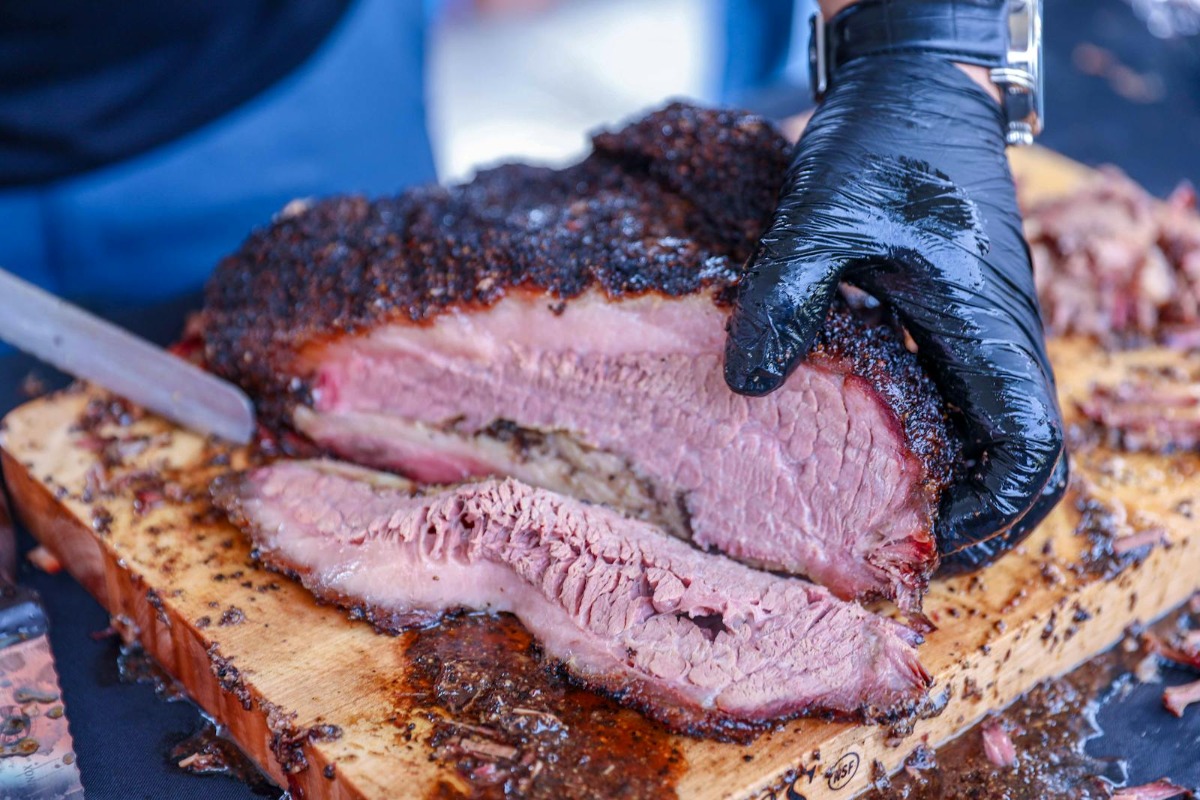
Step 9: Slice Against the Grain
Slicing wrong can make a perfectly cooked brisket feel chewy. The grain runs in different directions on the flat versus the point — you have to slice each separately.
- Place the rested brisket on a large cutting board, fat side up
- Identify the grain direction on the flat (look for the lines of muscle fibers)
- Separate the point from the flat by slicing along the fat seam between them
- Slice the flat against the grain in 1/4-inch slices (about pencil-thickness)
- Rotate the point 90 degrees and slice it against its grain (the grain runs different from the flat)
Use a long, sharp slicing knife. A serrated knife tears the meat. A 12-inch brisket slicing knife with a granton edge is ideal.
Brisket Cook Timeline at a Glance
| Stage | Time | Internal Temp | What to Do |
|---|---|---|---|
| Trim & season | 30 min | — | Trim fat to 1/4″, apply salt & pepper |
| Preheat smoker | 30–45 min | — | Stabilize at 225°F with clean smoke |
| Smoke unwrapped | 6–8 hours | 40°F → 165°F | Don’t open the lid |
| Wrap & continue | 3–5 hours | 165°F → 203°F | Push through the stall |
| Rest in cooler | 1–4 hours | 203°F → 145°F | The most important step |
| Slice & serve | 15 min | — | Against the grain, 1/4″ slices |
7 Common Brisket Mistakes (and How to Avoid Them)
1. Trusting time instead of temperature. Every brisket cooks differently. Use a thermometer and probe-tender feel, not a clock.
2. Opening the smoker constantly. Every peek costs you 15–20 minutes of cook time and lets smoke escape. Trust your wireless probe.
3. Skipping the rest. The single biggest mistake. A 30-minute rest minimum, 2 hours ideally. No exceptions.
4. Using too much wood. Brisket needs smoke for the first 4–6 hours only. After that, you’re just adding bitterness. Use 2–3 chunks for charcoal smokers, normal pellet feed for pellet grills.
5. Cooking at temps that are too high. Anything above 275°F dries out the meat before the connective tissue breaks down. Stay 225–250°F.
6. Slicing with the grain. This makes the meat feel tough no matter how perfectly you cooked it. Always slice against the grain in pencil-thickness slices.
7. Buying the wrong brisket. A thin, low-grade brisket can’t produce great results no matter how well you cook. Spend the extra $20 for USDA Choice or Prime, full packer.
FAQ: Smoking Brisket
How long does it take to smoke a 12-pound brisket?
Plan for 12–16 hours of cook time at 225°F, plus 1–4 hours of rest time. A general rule is 1–1.5 hours per pound at 225°F. Always start earlier than you think — a finished brisket can hold in a cooler for 4+ hours, but you can’t rush a slow cook.
What temperature is brisket done?
Internal temp of 200–205°F, but the real test is probe tenderness — your thermometer probe should slide in with no resistance. Some briskets need to go to 210°F before they’re tender.
Should I smoke brisket fat side up or fat side down?
For most smokers (pellet, charcoal, electric), smoke fat side up so the rendering fat bastes the meat. For offset smokers where heat comes from below, fat side down protects the meat from direct heat. When in doubt, fat side up works for everything.
Should I wrap my brisket in foil or butcher paper?
Pink butcher paper for the best balance of bark and moisture. Aluminum foil (“Texas Crutch”) for a faster, juicier cook with softer bark. No wrap at all gives the best bark but takes 4–6 hours longer.
What’s the best wood for smoking brisket?
Oak (especially post oak) is the gold standard — it’s the wood used in Central Texas BBQ. Hickory is a close second but more aggressive. Pecan and cherry blends work beautifully too. See our complete guide to the best wood for smoking brisket.
Why is my brisket tough?
Three likely causes: (1) you pulled it too early before the connective tissue broke down — cook to probe tender, not just to a temperature. (2) You skipped the rest — always rest 1+ hour. (3) You sliced with the grain instead of against it.
You’re Ready to Smoke Your First Brisket
That’s the entire process. Choose a quality brisket, trim it down, season with salt and pepper, smoke at 225°F until 165°F, wrap, push through the stall, rest until probe tender at 203°F, then rest in a cooler for 1–4 hours before slicing against the grain.
Your first brisket might not be perfect — nobody’s is. But it will be better than 90% of restaurant brisket, and every cook teaches you something new. The pitmasters you admire have all smoked dozens of briskets to get where they are. When you’re ready to serve, pair slices with a complementary sauce — our BBQ sauce guide covers which regional styles work best with brisket.
Before you start, make sure you have:
- The right smoker — see our best smokers for beginners guide
- The right wood — check our best wood for smoking brisket guide
- A reliable wireless thermometer (the single most important accessory)
Want to start with something easier first? Try our beginner’s guide to smoking ribs — ribs are far more forgiving and a great way to learn smoker fundamentals before tackling a $100 brisket.